
Retail Sales Tracking: The Metrics Every Small Shop Should Watch Each Month
Monthly sales tracking metrics that help small shops understand growth, stock movement, and customer demand more clearly.
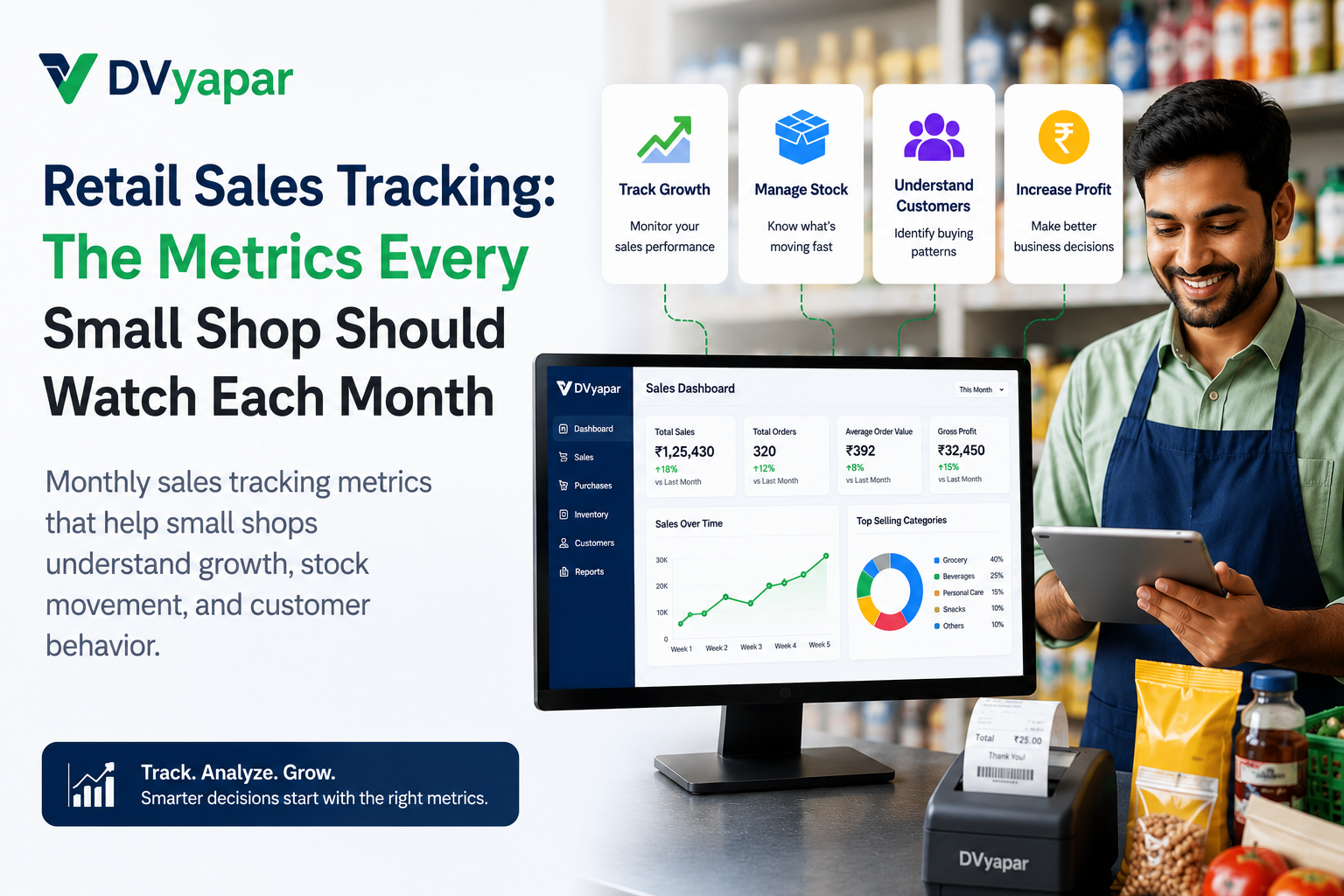
Retail Sales Tracking: The Metrics Every Small Shop Should Watch Each Month
Running a successful retail store isn't just about making sales—it's about understanding the numbers behind those sales. Many small shop owners focus only on daily revenue, but the most profitable retailers regularly track key performance metrics that reveal growth opportunities, inventory issues, and customer buying patterns.
Whether you run a grocery store, pharmacy, fashion shop, electronics store, or general retail business, monitoring the right metrics each month can help you make smarter business decisions.
In this guide, we'll cover the most important retail sales metrics every small shop should track.
Why Sales Tracking Matters
Without proper tracking, it's difficult to answer important questions such as:
- Is your business growing?
- Which products generate the most profit?
- Are customers spending more or less than before?
- Is inventory moving efficiently?
- Which categories deserve more attention?
Retail sales tracking transforms raw sales data into actionable insights that help improve profitability and business performance.
---
1. Total Monthly Sales
Total sales revenue is the first metric every retailer should monitor.
This metric shows:
- Overall business performance
- Growth trends
- Seasonal fluctuations
- Revenue targets achieved
Compare monthly sales against previous months and the same period last year to identify meaningful trends.
Formula
**Total Monthly Sales = Sum of All Sales During the Month**
---
2. Number of Transactions
Revenue alone doesn't tell the complete story.
Tracking the number of transactions helps determine whether sales growth comes from:
- More customers
- Higher spending per customer
- Promotional campaigns
A growing transaction count often indicates increasing customer traffic.
---
3. Average Bill Value (ABV)
Average Bill Value measures how much customers spend per purchase.
Formula
**Average Bill Value = Total Sales ÷ Total Transactions**
For example:
- Monthly Sales: ₹3,00,000
- Transactions: 1,000
Average Bill Value = ₹300
Improving this metric can significantly increase profits without attracting additional customers.
Ways to Increase ABV
- Product bundling
- Cross-selling
- Upselling premium products
- Checkout recommendations
---
4. Best-Selling Products
Every retailer should know which products contribute most to sales.
Track:
- Top-selling items
- Fast-moving products
- Seasonal demand trends
- Product category performance
Understanding best-sellers helps optimize inventory planning and purchasing decisions.
---
5. Gross Profit
Revenue is important, but profit matters more.
Gross profit measures how much money remains after deducting product costs.
Formula
**Gross Profit = Sales Revenue – Cost of Goods Sold (COGS)**
A store generating high revenue but low profit may need pricing adjustments or better purchasing strategies.
---
6. Inventory Turnover
Inventory turnover indicates how quickly stock is sold and replaced.
Formula
**Inventory Turnover = Cost of Goods Sold ÷ Average Inventory Value**
A healthy turnover rate means:
- Products are moving efficiently
- Capital isn't locked in excess inventory
- Storage costs remain controlled
Low turnover may indicate overstocking or weak demand.
---
7. Stock-Out Frequency
Stock-outs occur when products are unavailable when customers want them.
Frequent stock-outs can result in:
- Lost sales
- Customer dissatisfaction
- Reduced loyalty
Monitor:
- Frequently unavailable products
- Lost sales opportunities
- Supplier performance
Maintaining adequate stock levels improves customer satisfaction and revenue.
---
8. Customer Retention Rate
Repeat customers are often more valuable than new customers.
Tracking retention helps determine whether shoppers return to your store regularly.
Benefits of High Retention
- Lower marketing costs
- Consistent revenue
- Stronger customer loyalty
- Better word-of-mouth referrals
Retail businesses that retain customers effectively often experience more sustainable growth.
---
9. Sales by Category
Most retail stores sell products across multiple categories.
Track category-wise performance such as:
- Grocery
- Personal care
- Beverages
- Household items
- Electronics
- Apparel
Category-level reporting helps identify which departments drive revenue and profit.
---
10. Monthly Growth Rate
Growth rate measures business expansion over time.
Formula
**Growth Rate (%) = ((Current Month Sales – Previous Month Sales) ÷ Previous Month Sales) × 100**
This metric helps evaluate:
- Marketing effectiveness
- Seasonal trends
- Business health
- Expansion opportunities
Consistent growth is often a strong indicator of a healthy retail operation.
---
Common Sales Tracking Mistakes
Many small retailers make avoidable mistakes, including:
- Tracking only revenue
- Ignoring profit margins
- Not reviewing reports regularly
- Overlooking inventory metrics
- Failing to analyze customer behavior
Successful retailers review performance data every month and adjust strategies accordingly.
---
How Billing Software Simplifies Sales Tracking
Modern retail billing software automatically tracks:
- Daily and monthly sales
- Product performance
- Inventory movement
- Customer purchases
- Profit reports
- Growth trends
Instead of manually compiling spreadsheets, retailers can access real-time insights through a centralized dashboard.
This saves time, reduces errors, and enables faster decision-making.
---
How DVyapar Helps Retailers Track Performance
DVyapar provides small retailers with powerful reporting and sales tracking tools designed specifically for Indian businesses.
With DVyapar, retailers can:
- Monitor sales performance in real time
- Track inventory movement
- View category-wise reports
- Analyze customer purchasing patterns
- Generate business insights quickly
- Make data-driven decisions
The result is better visibility into business performance and greater control over daily operations.
---
Final Thoughts
The most successful retail businesses don't rely on guesswork—they rely on data.
By tracking metrics such as total sales, average bill value, inventory turnover, profit margins, customer retention, and monthly growth, small shop owners can identify opportunities, solve problems early, and improve profitability.
Start reviewing these metrics every month, and you'll gain a clearer understanding of what's driving your business forward and where improvements can be made.
The right retail sales tracking strategy can turn everyday transactions into valuable business intelligence that supports long-term growth.
FAQs
Frequently asked questions about Dvyapar
These answers stay the same across the site so readers get a clear product overview wherever they land.
Is DVyapar's online GST billing software suitable for small businesses?
Yes. DVyapar is built for retailers, wholesalers, distributors, and service businesses of all sizes. Its intuitive interface makes it easy for anyone to start using without technical expertise.
Why choose DVyapar over other GST billing software?
DVyapar focuses on simplicity, speed, and affordability. It combines billing, inventory, GST compliance, customer management, and business reporting into one easy-to-use platform, making it one of the best GST billing software in India for growing businesses.
Can I create GST invoices on DVyapar ?
Yes. DVyapar is one of the best GST bill invoice software. It lets you generate accurate GST-compliant invoices with automatic tax calculations in just a few clicks. In addition, you do not require any technical knowledge to learn it.
Can DVyapar help me manage inventory and purchases?
Yes, DVyapar's bill generator software can help you manage inventory and purchases easily. Every sale and purchase automatically updates your inventory, helping you maintain accurate stock levels and simplify inventory management.
Is DVyapar a cloud-based GST billing software?
Yes. As a secure online GST billing software, DVyapar allows you to access your business from anywhere without installing software. You can login with our credentials on the web or phone and access all the records and reports.
Do I need technical knowledge to use DVyapar?
No, you do not require any technical knowledge. DVyapar is built with simplicity in mind, making it easy for anyone to use. Its intuitive interface allows you to create invoices, manage inventory, and handle daily business operations.
Can I use Dvyapar on a phone?
Yes. The product is made to be usable on phone and desktop, so staff can work the way that suits the store best.
Can I share bills with customers?
Yes. You can print bills or share them digitally, including through common customer follow-up flows such as WhatsApp.
How do I get started?
Register here: https://app.dvyapar.com/register. Create your account, explore the product, and book a demo if you want help setting it up.
Is there a free trial?
Yes. You can start with a trial, try the main workflow, and see if it fits your shop before you move ahead.
How does pricing work?
Pricing is kept simple so you can compare the plan that matches your store size, billing counter, and support needs.
Can I manage multiple stores?
Yes. Dvyapar can support stores that want to keep more than one counter or location in a single view.
Does Dvyapar show reports?
Yes. You can check sales, stock movement, and daily business activity so the owner can review the store quickly.
Can I get help after signup?
Yes. You can book a demo or reach the team for setup help so the first day feels easier.